
Lessons from the field and the Inclusive Contractor Playbook
By Shafeeq Shamsid-Deen Jr., Senior Program Manager
Everyone wants to work with a great contractor. They are always in demand and often hard to find. But one thing I have seen consistently is that demand alone does not help contractors grow.
Across the clean energy sector, demand is accelerating. Organizations are working to meet existing project engagements, expand into new markets, and deliver more complex projects. But turning that demand into real, on-the-ground results requires more than a strong pipeline.
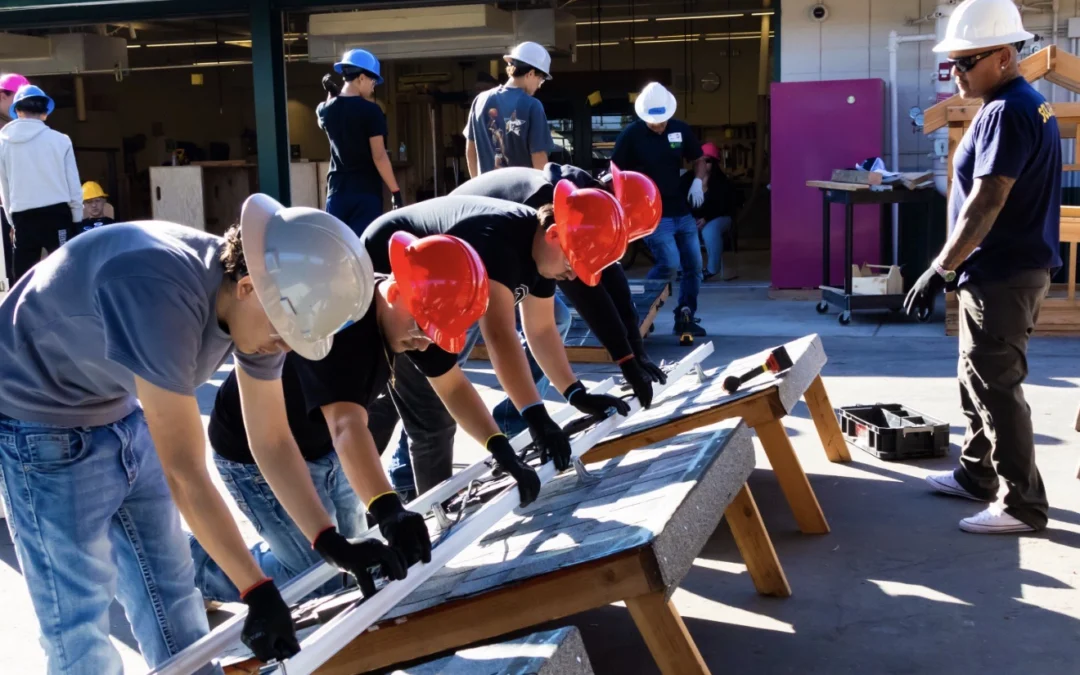
I saw this firsthand working with GRID Alternatives. In 2024, they were preparing for a nationwide initiative to deliver solar and storage systems to low income and disadvantaged communities. The question was not just how to scale projects. It was whether their contractor network could scale alongside them.
That question led to a broader body of work with The Center by Lendistry and Public Works Partners, and ultimately to the launch of the Inclusive Contractor Playbook through our Main Street Goes Green Initiative, with support from JPMorgan Chase.
What became clear pretty quickly
A one size fits all approach does not work.
Contractors are not all facing the same challenges, even when they are working in the same market. Some needed access to capital. Others were struggling to hire and onboard staff. Some had strong technical capabilities but needed help strengthening their business operations.
What stood out most was this: Contractors are not limited by opportunity but by the infrastructure needed to take advantage of it.
How we approached it
Instead of trying to force a standardized solution, we focused on understanding where each contractor was and what they actually needed to grow.
We developed a simple way to assess gaps and connect contractors to the right resources. It was not meant to be a heavy or rigid process. It became more of a practical tool to guide conversations and match support to real conditions.
In many ways, it turned into business services matchmaking. The goal was to get the right support to the right contractor at the right time.
Where contractors were getting stuck
Two challenges came up again and again.
Cost of materials
Contractors told us they were turning down work because they could not afford to front the cost of materials. That was a clear signal that something in the system was not working. So, we worked with GRID’s existing supplier relationships to secure discounts directly for contractors.
Access to capital
Even when opportunities were there, contractors needed working capital to take them on. Through The Center’s technical assistance and Lendistry’s lending platform, contractors can access financing and make more confident decisions about growth.
What this led to
These lessons started to take shape into something more structured.
That is what became the Inclusive Contractor Playbook.
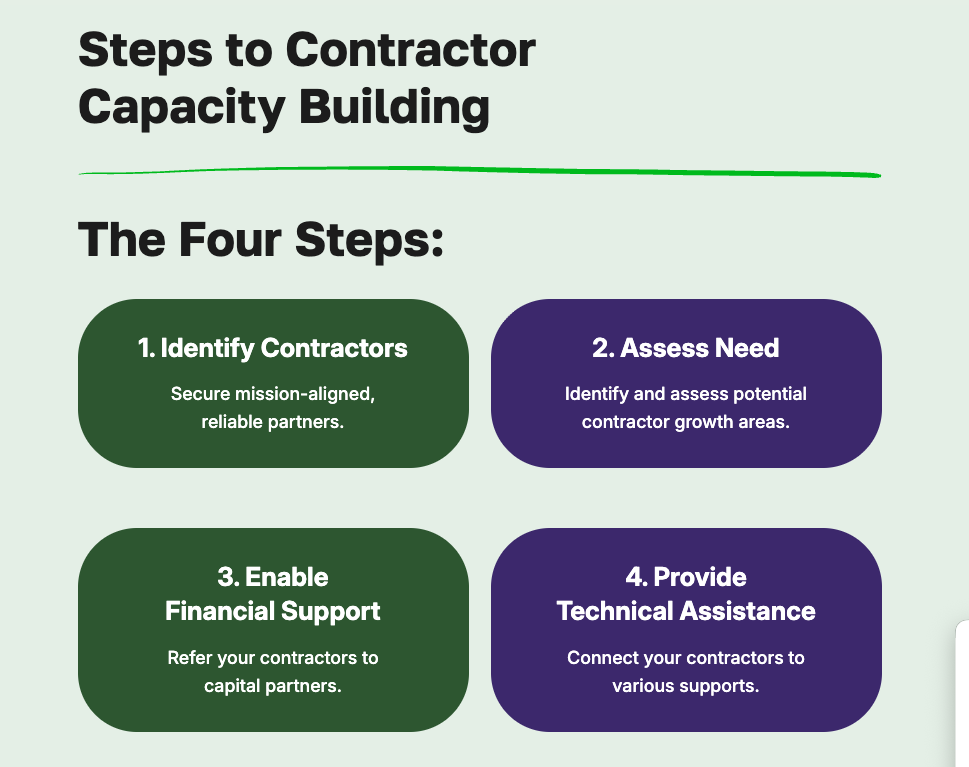
The Playbook outlines a four-step approach that reflects what we saw working in practice. It is meant to be practical, not theoretical. Something organizations can adapt based on their own goals, markets, and partners.
Why this matters
Building contractor networks goes beyond just filling a pipeline. It’s about making sure the businesses doing the work can actually deliver and grow over time.
When contractors are set up to succeed, projects move faster, quality improves, and organizations are better positioned to meet both performance and equity goals.
At The Center, we think a lot about how small business growth connects to broader community impact. This is one of those places where that connection is very clear.
Explore the Playbook
If you are thinking about how to build or strengthen a contractor network, the Inclusive Contractor Playbook is a good place to start.
Explore the Playbook to see how these ideas can be applied in your work.
April 7, 2026