
In Altadena, recovery has been uneven. Where more than 2,000 homes were lost in the Eaton Fire, many homeowners and business owners are still navigating insurance claims and financing gaps. For others, rebuilding is no longer an option.
The challenges facing Los Angeles today are not unique.
Communities across the country have faced similar obstacles after hurricanes, floods, tornadoes, and wildfires. While each disaster is different, many of the same questions emerge: How quickly can resources reach affected communities? What happens when insurance falls short? How do businesses stay afloat while recovery takes shape? And what prevents people from being displaced before help arrives?
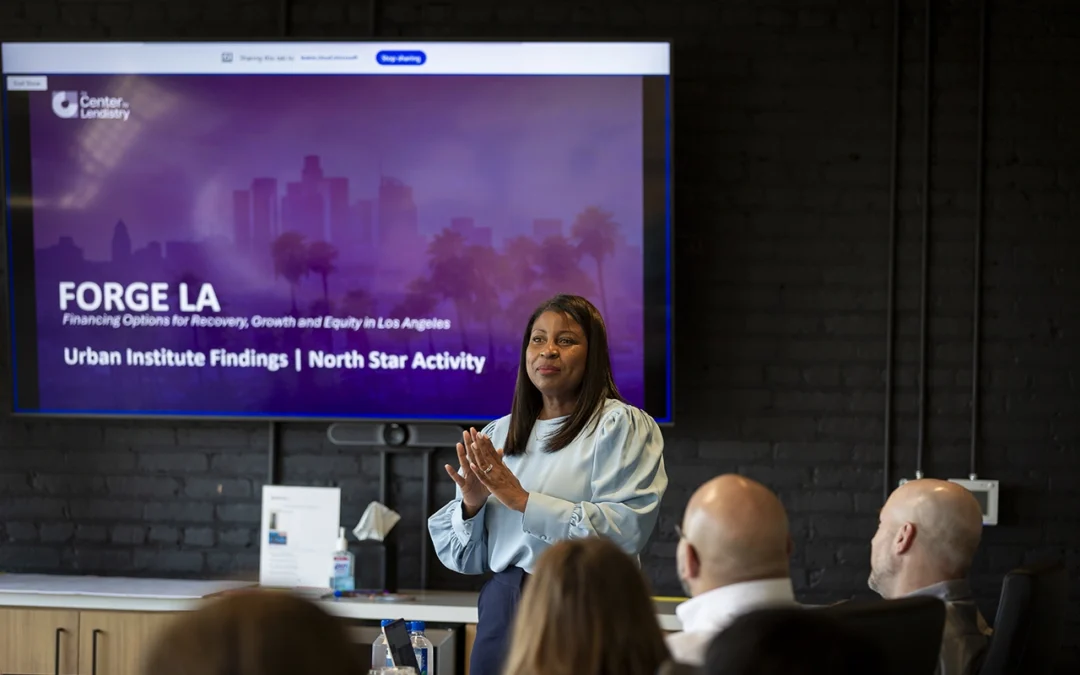
Those questions are at the heart of FORGE LA.
FORGE LA, short for Financing Options for Recovery, Growth, and Equity in Los Angeles, is a collaborative initiative led by The Center. The initiative brings together Community Development Financial Institutions (CDFIs), researchers, policy advocates and funders to identify financing solutions and policies that help communities rebuild more quickly and equitably after disasters.
As part of a JPMorgan Chase-funded research effort, The Urban Institute examined recovery efforts following disasters across the country, including Hurricane Harvey, Hurricane Ida, the Maui wildfires, and the Kerr County floods.
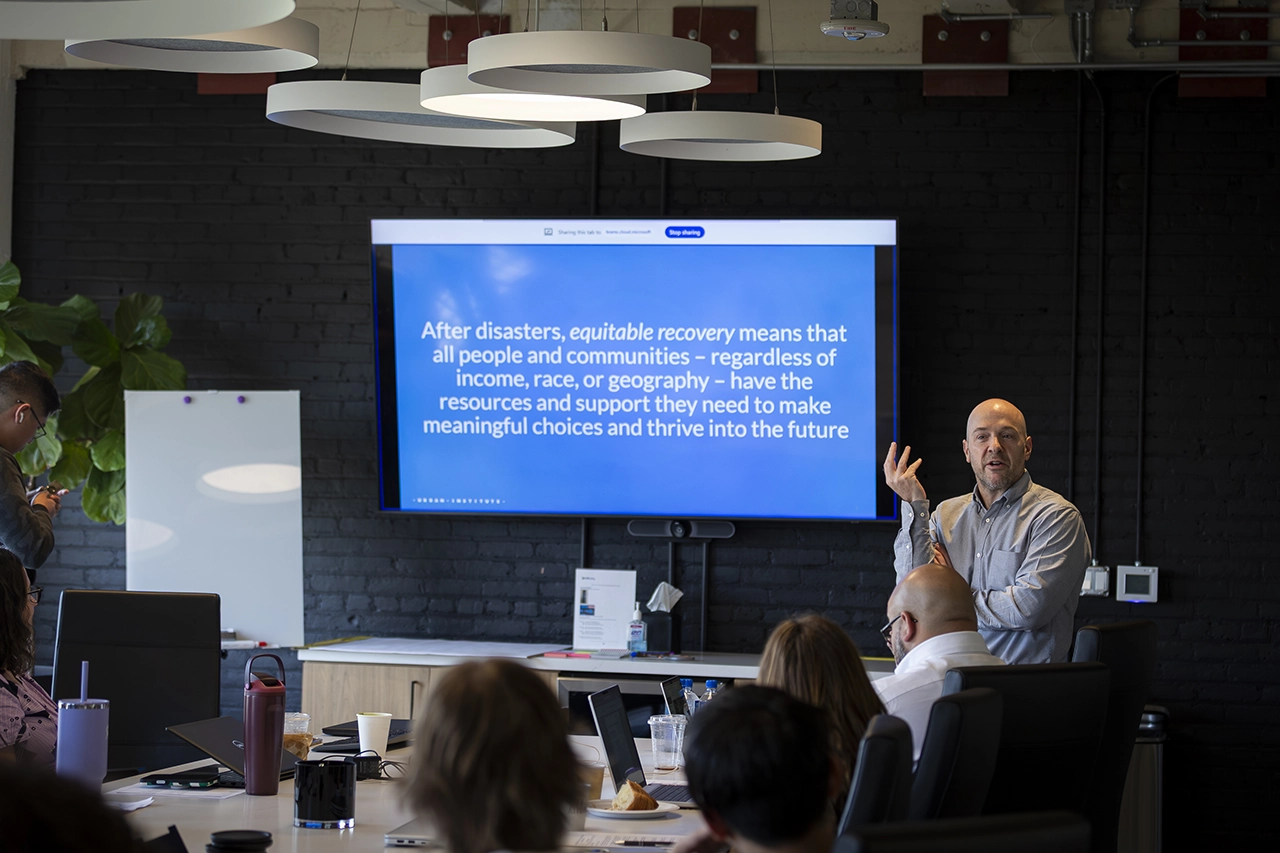
THEME #1: Recovery moves at the speed of capital
One of the clearest findings was that timing matters.
Federal disaster resources often take months or even years to reach households and businesses. In the meantime, families still need housing and business owners still need to make payroll.
The research found that grants, subsidized financing, and locally administered programs play an essential role in bridging these timing gaps. Without resources that can be deployed quickly, households may take on unsustainable debt, businesses may close permanently, and communities face a greater risk of displacement.
Federal programs are crucial, but it’s more effective when multiple sources of capital are coordinated and designed to meet people where they are.
THEME #2: Small businesses are a core part of community recovery
Another major takeaway was the critical role small businesses play in rebuilding communities. Researchers found that business recovery is frequently overlooked despite its direct connection to community stability.
As one interview participant explained:
“Funders want to leap in to help with individual recovery, which is important and needed and necessary, but they’re not seeing how small business recovery actually is a critical part of individual recovery. You can build a house for people to return to, but if there’s no job, they’re not going to return to that house.”
Small businesses provide jobs, essential services, and the local workforce that help communities rebuild. Contractors, electricians, childcare providers, restaurants, and neighborhood retailers all play a role.
THEME #3: The importance of trusted local organizations
Communities often recover more effectively when existing institutions have the relationships, infrastructure, and capacity to deliver resources quickly. Local governments, nonprofits, CDFIs, and community-based organizations frequently serve as the bridge between funding sources and the people who need help.
Researchers found that large-scale federal and private investments can often achieve greater impact when paired with local partners who understand community needs and have already established trust.
This finding reinforces the importance of building strong recovery systems before disasters occur, rather than trying to create them in the middle of a crisis.
FORGE LA was created because we’ve seen where existing systems fall short and understand the need for solutions that help communities recover more quickly and equitably.
The challenges facing Los Angeles today are not new. Communities across the country have faced them before. By learning from those experiences, FORGE LA aims to help shape more effective approaches to disaster recovery in Los Angeles and beyond.
Research Partner: The Urban Institute
Policy Partner: California Coalition for Community Investment
CDFIs: Century; Enterprise; Genesis LA, Inclusive Action for the City; Lendistry; Liif; LISC LA; Pacific Community Ventures; Partners Impact for Common Good; Prosperity Now; Raza Development Fund
June 24, 2026